 Tacitus
Turning physical workinto structured datafor process intelligence and automation.
EVERY CAPTURED RUN → ONE PROCESS GRAPH
The problem
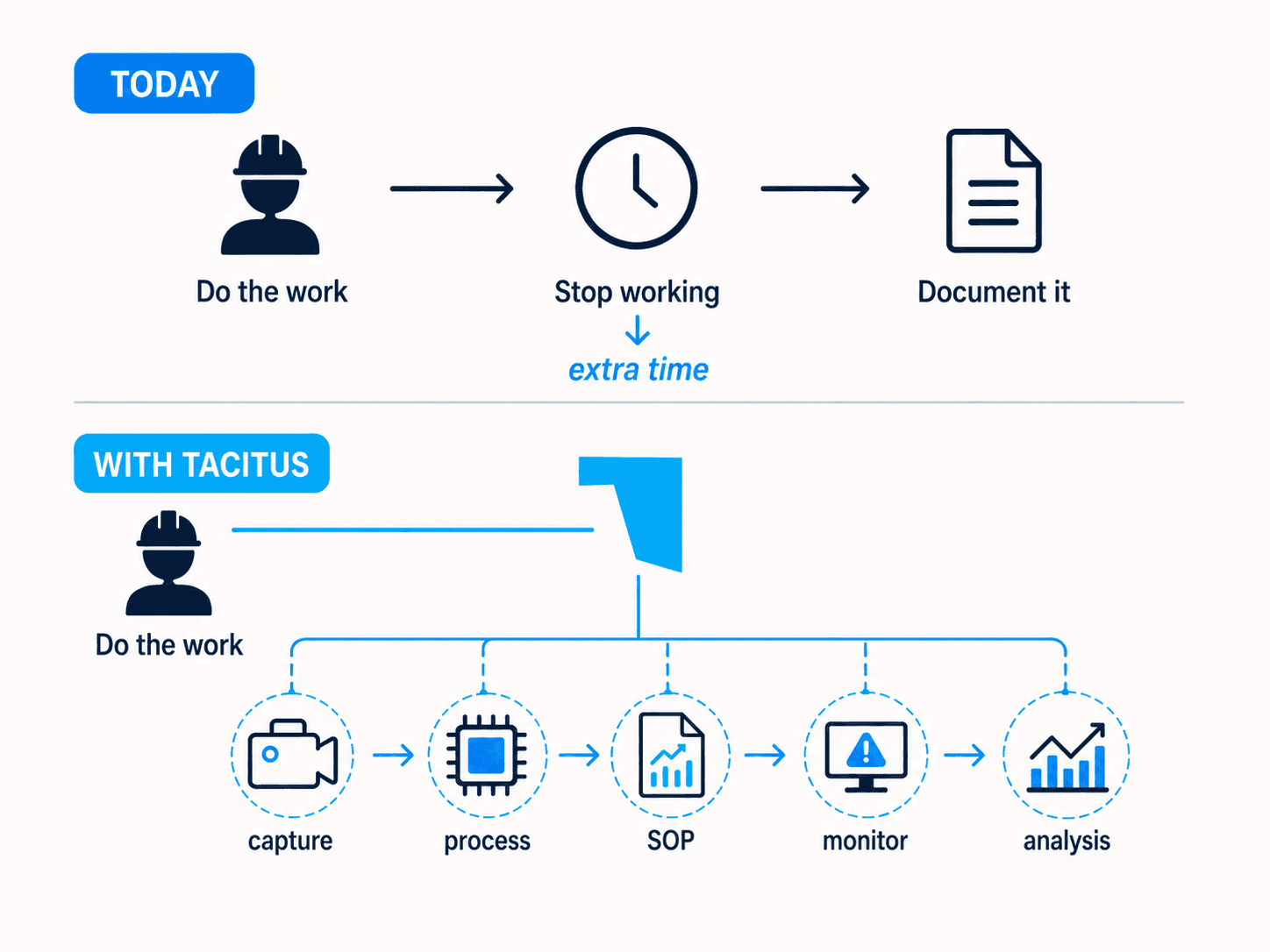
Software tells you where the latency started and what to fix: observed, measured, optimised. Physical work has no such telemetry. Ask what happened in the forty minutes a repair took, and the answer is:
“Ask Steve.”
Software became optimisable once it became observable. The same principle, applied to human work: an execution data layer for physical operations.
The solution
Skilled work, preserved the way it is actually done.
FIG. 02
Capture
Record the job as it happens: a chest-pocket phone, a GoPro, or the CCTV already on your walls. The footage is the documentation.
FIG. 03
Structure
The pipeline transcribes, segments and tags the work into a verified procedure: steps, frames, tools and outcomes, with provenance end to end.
FIG. 04
Observe
Every later run is matched against the record. A skipped critical step surfaces as an alert in minutes, not when a senior finally notices hours too late.
The product
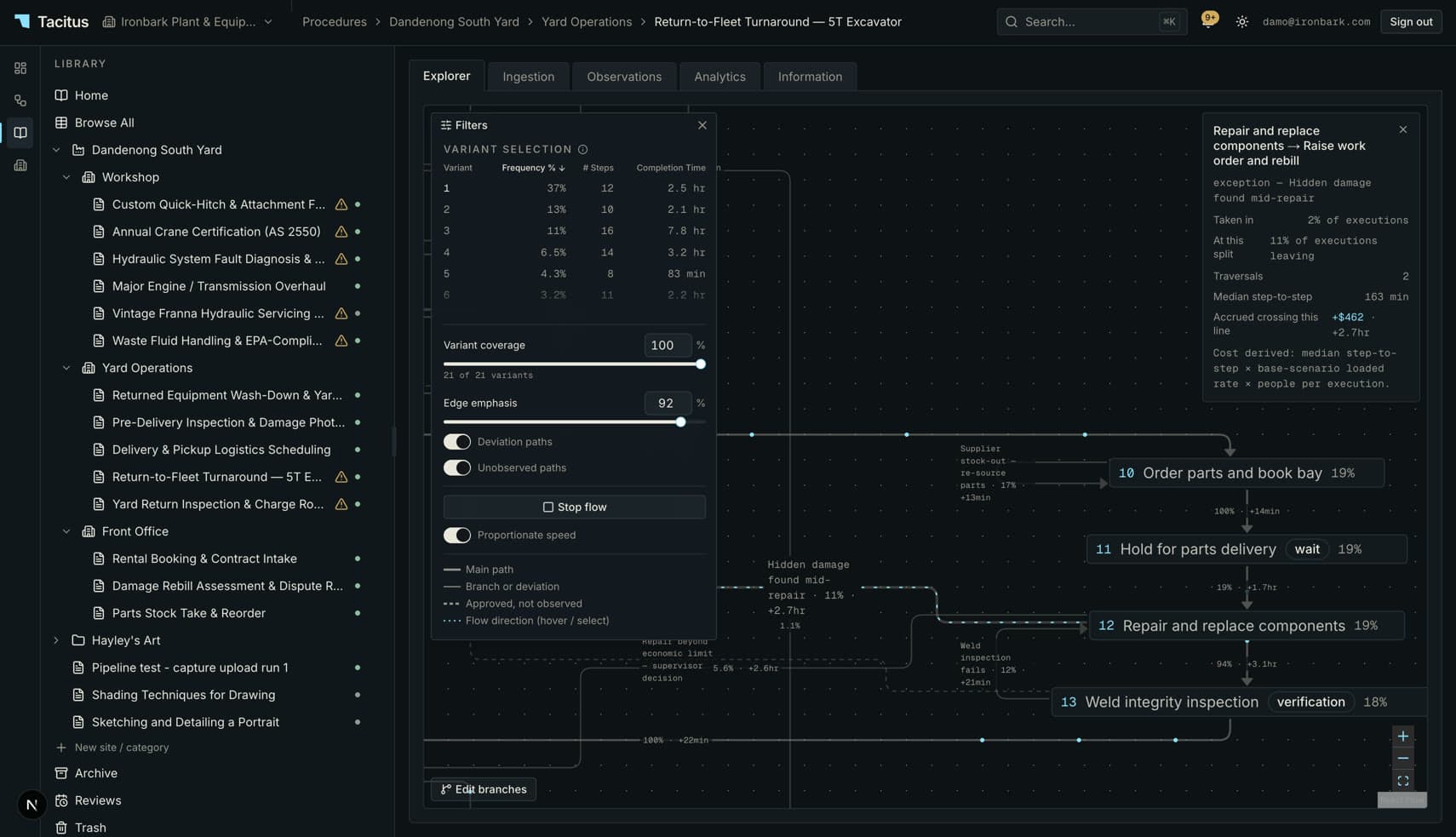
FIG. 05·1: Every run of a procedure, folded into one map of how the work is actually performed, not just what the SOP says.
The market
Process-mining software is forecast to grow from $1.4B in 2024 to $21.9B by 2030, yet not one incumbent can see work that is not already digital.
88% of organisations already use AI in at least one business function. Only 39% report earnings impact from it.
When automation reaches physical work, the returns will belong to the operations that are already machine-readable.
$21.9B
PROCESS-MINING MARKET BY 2030, FROM $1.4B IN 2024
88% / 39%
ORGS USING AI VS. REPORTING EARNINGS IMPACT
0
INCUMBENTS WHO CAN SEE PHYSICAL WORK
About
Chronicles of Work
Tacitus started with an inbound request. A local firm whose process knowledge was trapped within its senior workers wanted to explore options for software-powered SOP generation. Trapped knowledge and time constraints were causing so much pain that senior staff proposed capturing their work using chest-mounted cameras.
Soon after, another business presented footage of a worker violating undocumented protocols which led to a workplace accident. The preconditions to the accident were clearly visible on CCTV for hours prior, but nobody on the ground noticed.
Both businesses capture footage of their work.
Both businesses want to make use of this footage.
But the software to read and structure footage of work did not exist. So I started building it.
The Roman historian Tacitus was an early example of how record-keeping could provide valuable insights into a complex system. All large modern enterprises keep expansive records of their digital work. Physical processes are the last element of modern business that remain largely unrecorded. Our endgame is to create detailed, evolving records of the human labour that occurs in businesses; the undocumented tacit knowledge, the shortcuts and even the mistakes. We want to make manual work machine-readable and create a new market for physical execution data.
Founder
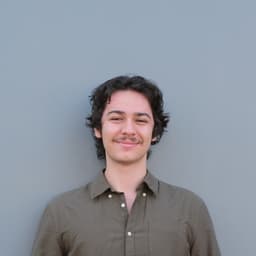
Jacob Long
Founder · BSc Computer Science · BBus Management
Previously corporate monitoring & observability, and full-stack development for clients in insurance and construction.
Contact
Talk to us
Fill out our form or email jacob@tacitus-ai.com